
Have you ever wondered why a seemingly small sound, a flickering light, or a scratchy tag on a shirt can trigger a massive emotional response in your child?
For many parents, these moments are confusing. You might wonder if it’s a behavioral issue or if your child is just being “picky.” But according to new research, the answer lies deep within the brain’s wiring.
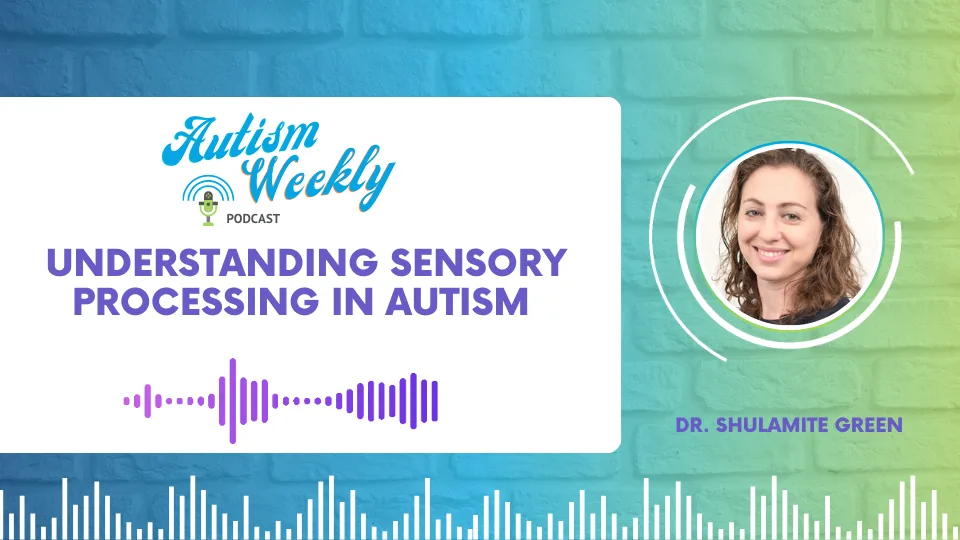
In this week’s episode of the Autism Weekly Podcast, we sat down with Dr. Shulamite Green, an Associate Professor at UCLA and director of the UCLA SCAN (Sensory, Cognitive, and Affective Neurodevelopment) Lab. She breaks down the neuroscience of sensory processing in a way that changes how we view autism, anxiety, and daily struggles.
If you have ever felt helpless watching a loved one struggle with sensory overload, this research might just give you that “Aha!” moment you’ve been waiting for.
The “Brain on Fire”: A Biological Reality
Imagine walking into a busy coffee shop. You hear the espresso machine, people talking, the door opening, and music playing. For a neurotypical brain, a specific region called the thalamus acts as a gatekeeper. It filters out the background noise so you can focus on the person sitting across from you.
Dr. Green explains that for many autistic individuals, this filtering system works differently.
“The brain isn’t filtering out that information,” Dr. Green notes. “They are experiencing everything, all the time.”
This isn’t just a feeling; it is visible in brain imaging. Dr. Green’s research at the UCLA SCAN Lab shows that when autistic adolescents are exposed to sensory stimulation, their brains react much more strongly than their peers.
Specifically, the part of the brain responsible for the “fight or flight” response lights up. This means that a loud noise isn’t just annoying; the brain interprets it as a genuine threat. Autistic individuals often describe this sensation as their brain feeling like it is “on fire.”
For parents and clinicians, this is a crucial shift in perspective. A meltdown in a grocery store isn’t a tantrum. It is a biological response to a brain that is overwhelmed by too much data and perceives danger where others see none.
When Sensory Processing Meets Anxiety
One of the most significant findings Dr. Green discusses is the link between sensory over reactivity and mental health.
“Sensory over reactivity is highly correlated with mental health challenges, particularly anxiety, even in kids,” says Dr. Green.
This makes sense when you consider the biology. If your brain is constantly signaling “threat” due to sensory input, you are living in a chronic state of high alert. Over time, this constant fight-or-flight activation can manifest as severe anxiety.
Typically, children get better at filtering sensory signals by age 10. However, if that basic regulation doesn’t develop, autistic children often face compounding challenges as they enter adolescence. The inability to filter background noise or ignore distractions can make school environments and friendships incredibly difficult to navigate.
Actionable Tips: Building Independence Early
Understanding the science is validating, but families also need practical steps. How do you help a child whose brain is constantly on high alert?
Dr. Green emphasizes the importance of looking ahead. While it is natural to focus on the immediate challenges of childhood, families should start thinking about the transition to adulthood much earlier than they might expect.
Start the Transition Conversation at Age 12
Dr. Green advises parents to begin working on independent living skills around the ages of 12 or 13.
- Practice Self-Advocacy: Help your teen articulate what they are feeling. Instead of just reacting to the noise, encourage them to say, “The noise in here is hurting my ears; I need to step outside.”
- Identify Triggers: Work together to map out which environments cause that “brain on fire” feeling. Is it the mall? The cafeteria? Knowing the triggers allows you to create strategies before the anxiety spikes.
- Create Safe Zones: Ensure there is always a retreat space available where the sensory input is controlled and low.
By building these skills early, you help your child manage their environment rather than being ruled by it.
Join the Research
Dr. Green and her team at UCLA are actively working to understand these biological underpinnings to develop better interventions. They are looking for answers that go beyond behavior and address the root causes of sensory challenges.
If you are interested in learning more about their studies or participating in future research, you can visit the UCLA SCAN Lab website.

