Raising an autistic child is a journey filled with unique joys and challenges. As a parent, you are your child’s first teacher and biggest advocate. But what if you could become their most effective therapist, too? A powerful approach called parent-mediated intervention is changing how we think about autism family support, placing parents and caregivers at the very heart of their child’s progress.
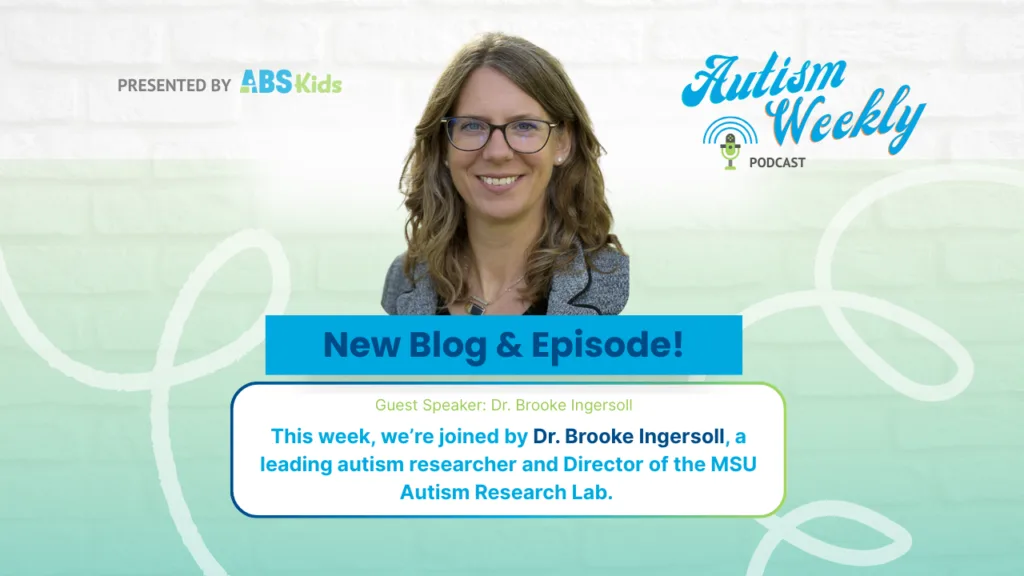
In a recent episode of our Autism Weekly podcast, we had the privilege of speaking with Dr. Brooke Ingersoll, a leading autism researcher and director of the Michigan State University Autism Research Lab. She shared transformative insights into how family involvement can reshape a child’s developmental path. This approach isn’t about adding more to your plate; it’s about equipping you with the tools to make your everyday interactions more meaningful and impactful.
Shifting the Focus: From Therapist-Led to Family-Centered
For years, many autism therapies have centered on sessions where a clinician works directly with a child. While this is valuable, parent-mediated intervention offers a different perspective. It empowers the family by training them to implement therapeutic strategies within their daily routines.
As Dr. Ingersoll explained, this model reframes the parents’ role entirely. “We are no longer treating parents as like an intervention deliverer,” she said. “We are taking a very different approach where we’re talking to parents about what is important to you, what do you need, what do you need from us, and then how do we help you get there?”
This philosophy puts the family’s needs, goals, and values first. It recognizes that the home environment is where a child spends most of their time and learns the most. By integrating proven techniques into playtime, meals, and daily chores, you create countless opportunities for growth.
What is Parent-Mediated Intervention?
Parent-mediated intervention is an evidence-based practice where caregivers learn to use specific strategies to improve their child’s social communication and other developmental skills. A therapist or coach works directly with the parents, teaching them techniques they can use in natural settings.
Dr. Ingersoll is a key figure behind Project Impact, a renowned parent-coaching program. This program is based on a Naturalistic Developmental Behavioral Intervention (NDBI) approach. NDBI combines the principles of applied behavior analysis (ABA) with developmental science, focusing on teaching skills within the context of a child’s daily life and natural interests.
Instead of structured drills, learning happens organically. This approach not only helps children acquire new skills but also strengthens the parent-child bond and can reduce family stress.
Three Practical Tips for Everyday
One of the most powerful aspects of parent-mediated intervention is its practicality. Dr. Ingersoll shared three core strategies from Project Impact that any parent can start using today to foster communication.
1. Follow Your Child’s Lead
The first step is to observe and join your child in what they are already doing. If they are lining up toy cars, sit down and start lining them up, too. If they are focused on a spinning top, show interest in the top with them.
By following their focus of attention, you are entering their world. This shows your child that you value their interests, which makes them more likely to engage with you. This shared experience becomes the foundation for communication.
2. Adjust Your Communication Style
Many autistic children are visual learners and may struggle to process spoken language alone. To help them, it’s important to simplify your language and emphasize non-verbal cues.
Try using shorter sentences and pair your words with gestures, facial expressions, and actions. For example, if you want your child to come to the table, you can say “Come here” while patting the chair and using an inviting expression. This makes your message clearer and easier to understand.
3. Create Natural Opportunities to Communicate
Look for moments in your daily routine where your child might need to communicate a want or need. The goal isn’t to frustrate them, but to create a natural, low-pressure reason for them to initiate communication.
For example, you could place a favorite snack in a clear container that is difficult to open. This creates a situation where your child needs to ask for help, either with words, gestures, or by bringing the container to you. Or, during a familiar game, you can pause and wait for them to signal that they want to continue.
Maximizing Your Impact as a Parent
These strategies are most effective for children who are in the early stages of learning language. However, the core principle of family involvement is beneficial for all. A common concern for parents is time. With busy schedules, finding time for therapy can be a struggle.
Dr. Ingersoll offered a compelling perspective on this. “If you only have one hour a week for therapy,” she noted, “you’re going to get a lot more bang for your buck if that one hour a week is spent helping coach those individuals that live with the child than if you spend one hour a week working with the child.”
The logic is simple: A therapist may see a child for a few hours a week, but a parent is there for hundreds of waking hours. By empowering parents, the impact of therapy expands exponentially, turning every moment into a potential learning opportunity.
Finding the Right Autism Family Support
Parent-mediated intervention can serve as a primary therapy or as a powerful supplement to other services your child receives. It helps bridge the gap between the clinic and home, ensuring that skills learned in therapy are used in the real world.
If you’re interested in learning more, start by talking to your child’s therapy provider. Ask about their approach to family involvement and whether they offer parent coaching. You are a key member of your child’s care team, and your involvement is crucial. Exploring these autism resources can open new doors for your child’s development and bring your family closer together.
Autism weekly is now found on all of the major listening apps including apple podcasts, stitcher, Spotify, amazon music, and more. Subscribe to be notified when we post a new podcast. Autism weekly is produced by ABS Kids. ABS Kids is proud to provide diagnostic assessments and ABA therapy to children with developmental delays like Autism Spectrum Disorder. You can learn more about ABS Kids and the Autism Weekly podcast by visiting abskids.com.

