
Every parent wants their child to have people who understand them. For families raising autistic children, that hope can come with questions. Will my child make friends? How do I help without pushing too hard? What happens when school supports end?
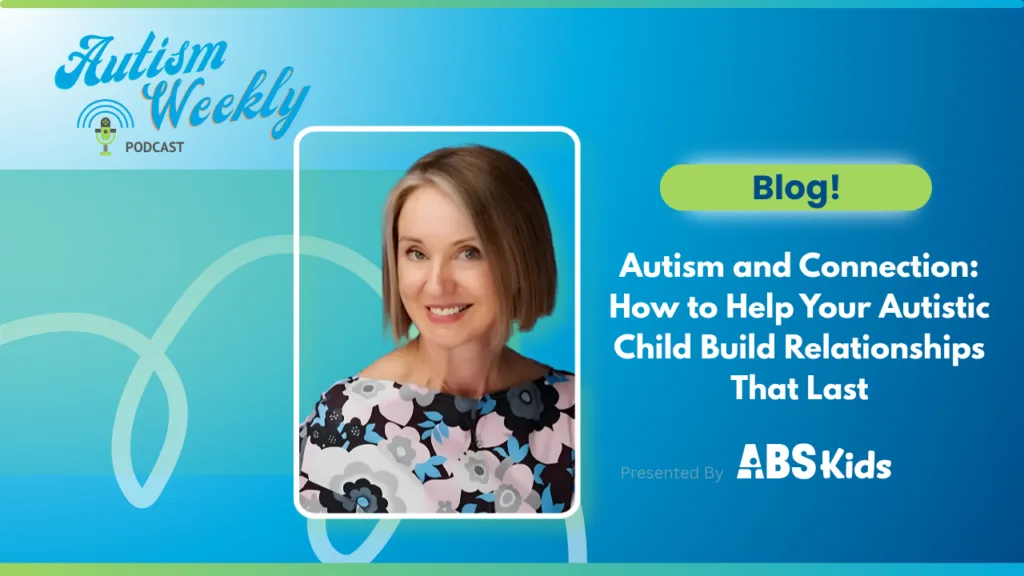
On this episode of the Autism Weekly podcast, host Jeff Skibitsky talks with Dr. Rachel Loftin, Chief Clinical Officer and co-founder of Prosper Health, the largest provider of mental health services for autistic adults in the country. Dr. Loftin trained at the Yale Child Study Center and has spent more than 20 years supporting autistic people from early childhood through adulthood.
Her message for families is practical and hopeful. The skills that help autistic adults thrive can start at home, right now.
What Connection Really Means
Dr. Loftin defines connection simply: enjoying time with another person.
That definition shifts the focus. Instead of asking whether a child is doing social behaviors “correctly,” families can ask whether their child is enjoying the people and activities around them.
“It is hard to just enjoy being with someone if a lot of your attention has to go toward thinking about if you’re doing things right,” she explains.
Think about a job interview or meeting new people. When you’re focused on how you’re coming across, it’s hard to connect. For many autistic people, that pressure shows up in everyday interactions. Reducing it makes real connection more possible.
Start With Your Child’s Interests
Many parents have tried soccer, basketball, and other team activities, and seen none of them work. It’s easy to conclude that a child doesn’t want to be social.
Dr. Loftin encourages families to look again. The issue may be the activity, not the child. A card club at a local gaming store or a building group at a LEGO store may be a better fit.
When an activity matches what your child loves, connection has a natural starting point.
Try this: Make a list of your child’s favorite topics and activities. Then look for groups, classes, or clubs built around those interests.
Ask, Don’t Assume
Every person has different social needs. Some people want a large circle of friends. Others feel content with one or two close relationships, or with plenty of time on their own.
“Having few friends or no friends doesn’t necessarily mean someone’s lonely,” Dr. Loftin says. “Having a lot of people around doesn’t necessarily mean someone is connected.”
Parents and professionals can sometimes project their own social needs onto a child. The better approach is to ask your child what they want, and to respect the answer.
Choice matters too. Autistic children and adults deserve the same say as anyone else in who they spend time with. Many autistic people also find deep support in spending time with others who share similar experiences.
Explain the Why Behind Social Expectations
Dr. Loftin separates two things that often get blended together: understanding social expectations and being forced to follow them.
She recommends teaching the unwritten rules clearly. What is expected in this setting? Why does that expectation exist? When does it matter, and when can it be set aside?
That information gives your child choices. With it, they can decide when to follow an expectation, when to ask for an accommodation, or when to step away.
She also emphasizes teaching self-advocacy. A child who can say “I listen better when I’m standing” or “I enjoy movies more when I can move” has a skill that will serve them for life.
“The goal is creating a greater understanding for the person and then giving them that agency to better navigate the world,” she says.
This aligns with how ABS Kids approaches care. Meaningful goals focus on what helps each child participate, communicate, and thrive in ways that matter to them.
Lead With Curiosity Before Advice
When your child is struggling, the instinct is to jump in with solutions. Dr. Loftin admits she’s done it with her own teenager.
She suggests starting with open-ended questions instead:
- What was that like for you?
- How do you see it?
- What would help?
“It’s very hard for anyone to take advice from someone when they feel like that person doesn’t understand their perspective yet,” she says.
Curiosity doesn’t replace your guidance. It makes your guidance more likely to land.
Make Hard Conversations Part of Everyday Life
Topics like relationships, dating, consent, and boundaries can feel intimidating. Dr. Loftin recommends small, ongoing conversations rather than one big talk.
TV shows and movies offer natural openings. Pause and ask: What just happened? Was that okay? Did both people want that? How could it have gone differently?
Keep trusted books and websites easy to find, too. If your child doesn’t feel comfortable coming to you with a question, they’ll still find reliable information.
The more often these topics come up, the less awkward they feel for everyone.
What You Can Do Now for Your Young Child
For parents of younger children, Dr. Loftin’s advice centers on helping your child understand who they are.
Children who know their preferences can set boundaries. Children who can advocate for themselves make healthier choices. Both skills can start early.
One example: if your 5-year-old doesn’t want to hug a relative, let them say no. That moment teaches consent. What your child learns about their own body shapes how they understand other people’s boundaries later.
It can feel uncomfortable in the moment. Dr. Loftin encourages parents to think 20 or 30 years ahead. What will matter most for your child as an adult?
Understanding Adult Autism Diagnosis
More adults are being diagnosed with autism than ever before. Dr. Loftin notes that the experience often looks different from a childhood diagnosis.
Parents of young children tend to look forward and wonder what’s ahead. Adults tend to look back. A diagnosis can help them make sense of past experiences, including feedback or difficulties that never had a clear explanation.
For many adults, diagnosis brings relief. It allows them to see their history with greater accuracy and more self-compassion. They weren’t making bad choices. They were doing their best in a world that wasn’t built for how their brain works.
If you’re an adult who has wondered whether you might be autistic, you are not alone. An evaluation with a qualified professional can help you find answers.
A Message for Autistic Readers and Listeners
Dr. Loftin closed the conversation with words worth sharing in full:
“You don’t need to be less autistic. And you don’t have to be less autistic to deserve relationships or community or a meaningful life. And you truly do belong here.”
Autistic people shouldn’t carry the full weight of fitting in. Families, schools, workplaces, and communities all have a role in creating a world that understands and includes autistic people.
Key Takeaways for Families
- Define connection as enjoyment, not performance.
- Build opportunities around your child’s interests.
- Ask about your child’s social needs instead of assuming.
- Explain social expectations and teach self-advocacy.
- Lead with curiosity before offering advice.
- Talk about relationships and boundaries often, starting early.
- Help your child understand who they are.
Listen to the Full Episode
Hear the complete conversation with Dr. Rachel Loftin on the Autism Weekly podcast.
To learn more about Dr. Loftin’s work, visit the Prosper Health blog.
Looking for support for your child? Find an ABS Kids ABA therapy center near you.

