
You noticed something. You brought it up. And someone told you to wait and see.
Maybe it was a pediatrician who said your child would grow out of it. Maybe it was a teacher who said every kid develops differently. Maybe you left the appointment wondering if you had overreacted.
You probably did not.
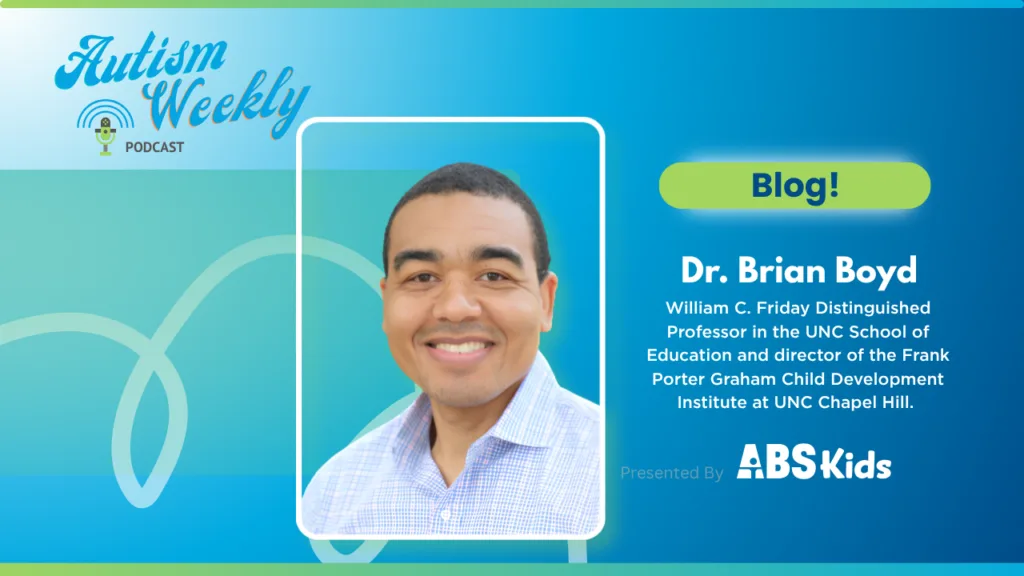
Delayed and missed diagnoses are a documented pattern, not a personal failure. They show up most often for children of color and/or for children in families where English is a second language. Dr. Brian Boyd, who directs the Frank Porter Graham Child Development Institute at the University of North Carolina at Chapel Hill, studies exactly this. His point is worth sitting with: the bias behind these delays usually is not one person deciding to dismiss you but rather built into how systems run.
“If it was just within the individual, we could overcome it,” he told us on the Autism Weekly podcast. “But when there are biases in the system itself, it is harder to overcome.”
That is not a reason to stop asking. It is a reason to ask differently. Here is how.
Why “wait and see” costs more than it sounds like
The phrase feels harmless. It is not neutral.
Early intervention windows are time-sensitive. A six-month wait for a referral, plus a nine-month wait for an evaluation, plus a wait for services to start, adds up to a real chunk of a young child’s development. And the effects compound. Dr. Boyd pointed to research showing Black autistic children are roughly twice as likely as white autistic children to be diagnosed with an intellectual disability diagnosis. Later diagnosis and thinner services afterward are likely part of that story.
None of that means a delay determines your child’s future. It means the delay is worth pushing on now.
Say this at your next appointment
Vague concerns get vague answers. Specific concerns get documented. Three things change the outcome of an appointment more than anything else.
- Bring examples with dates. Not “he doesn’t talk much.” Instead: “At 20 months he had six words. At 24 months he has four. He stopped using ‘milk’ and ‘up’ around Thanksgiving.”
- Ask for a referral out loud, and name what you want. Try: “I would like a referral for a developmental evaluation. Can we put that in today’s notes?”
- Ask for the answer in writing. If the response is no, this is the sentence that matters: “Can you document in my child’s chart that I requested an evaluation and that it was declined, and note the reason?”
That last one is not confrontational. It is record-keeping. It also tends to change the conversation, because it moves a verbal brush-off into a written medical decision the physician has to stand behind.
If you get a no and your gut still says something is going on, you can request a second opinion, and in most states you can contact your Early Intervention program directly without a physician referral for children under three.
Don’t Wait: Early intervention is key. If you have concerns, speak to your pediatrician or contact a diagnostic clinic. You can take the free MCHAT to get the conversation started.
For school: put it in writing
Schools operate on timelines that start when a written request arrives. A hallway conversation does not start the clock. An email does.
A short version that works:
Dear [Principal or Special Education Coordinator], I am formally requesting an evaluation for special education services for my child, [name], in [grade/teacher]. I have concerns about [communication, social interaction, sensory responses, classroom behavior, academic progress]. Please let me know the next steps and the timeline for this process. Thank you, [Your name and date]
Send it by email so you have a timestamp. Keep every reply in one folder.
In the IEP meeting
You are not a guest at that table. Legally, you are a member of the team.
A few things that help:
- Bring someone. A partner, a friend, a relative, an advocate. Two sets of ears catch more, and the dynamic in the room shifts.
- Ask what the data shows. “What are you seeing that supports that goal?” is a fair question, and a good team will have an answer.
- Ask about your child’s strengths. If the entire plan is built on deficits, something is missing.
- You can decline to sign that day. “I would like to take this home and review it” is a complete sentence.
- Ask for a copy of everything. Draft goals, evaluations, and meeting notes.
Dr. Boyd’s advice to families here was direct. There is strength in numbers, and you are almost certainly not the only family facing this in that building. Local advocacy organizations and parent training centers already know how your district operates, often better than you can learn on your own. And if a system is not providing services your child is entitled to, seeking legal help is a legitimate option, not an overreaction.
What good support looks like
Once you have services, the question shifts. How do you tell whether a provider or school is doing this well?
Dr. Boyd gave a useful set of markers. Use them as a checklist.
- The plan starts with what your child can do, not only a list of what they cannot.
- The plan fits your family. Your household, your routines, your language, your priorities. If it looks like it could belong to anyone, it might.
- They help you navigate the system, rather than assuming you already know how it works.
- Decisions are shared. You are asked what matters to you, and the answer changes the plan.
- They assume they do not know everything about your family, and they ask instead of guessing.
He was clear that this is professional work, not family work. “It’s not on the family. It’s our job to better support that family.”
If you are getting a plan that feels generic, that instinct is often right. Underfunded, short-staffed systems drift toward one-size-fits-all approaches. That is a system problem, and it is fair to name it.
Build on what your child loves
One more thing worth carrying into any meeting.
Dr. Boyd’s entire career started with a two-year-old named Ben, back in the late 1990s. Ben’s first word was “pentagon.” Before he could say it, he could spot the shape anywhere in a room.
At the time, a lot of practice treated an intense interest as something to reduce. Dr. Boyd went the other direction and spent years studying focused interests as a way in, using what a child already loves to build communication and connection. Ben, Dr. Boyd shared, grew up to be a jazz musician.
So when a plan proposes eliminating your child’s favorite thing, it is fair to ask whether it could be used instead. The trains, the elevators, the specific song on repeat. Skilled clinicians treat those as leverage, not obstacles.
You are not doing this alone
The systems your family is navigating are harder than they should be. That is not a reflection of you, and it is not a reflection of your child.
Dr. Boyd’s closing note was that despite everything, he remains hopeful. The field has started to admit out loud who it has been leaving out, and more researchers are working differently because of it.
Keep the records. Ask the questions. Find your people.
About Dr. Brian Boyd
Brian Boyd, Ph.D., is the William C. Friday Distinguished Professor in the University of North Carolina at Chapel Hill (UNC) School of Education and director of the Frank Porter Graham Child Development Institute at UNC. He previously directed the Juniper Gardens Children’s Project at the University of Kansas. A special educator by training, his research focuses on evidence-based practices for school and home settings and on how implicit bias and race affect outcomes for children with and without disabilities. His work has been continuously funded by the Institute of Education Sciences and the National Institutes of Health. He is past vice president of the International Society for Autism Research and founder of the Black Empowerment and Autism Network (BEAM).
About ABS Kids: ABS Kids partners with children and families to deliver high-quality, compassionate applied behavior analysis (ABA) therapy at home, in schools, and in our centers. From diagnosis to ongoing treatment, we support children with autism every step of the way. We proudly provide ABA therapy in California, North Carolina, South Carolina, Tennessee, and Utah. Join our team to combine purpose with professional growth.

