

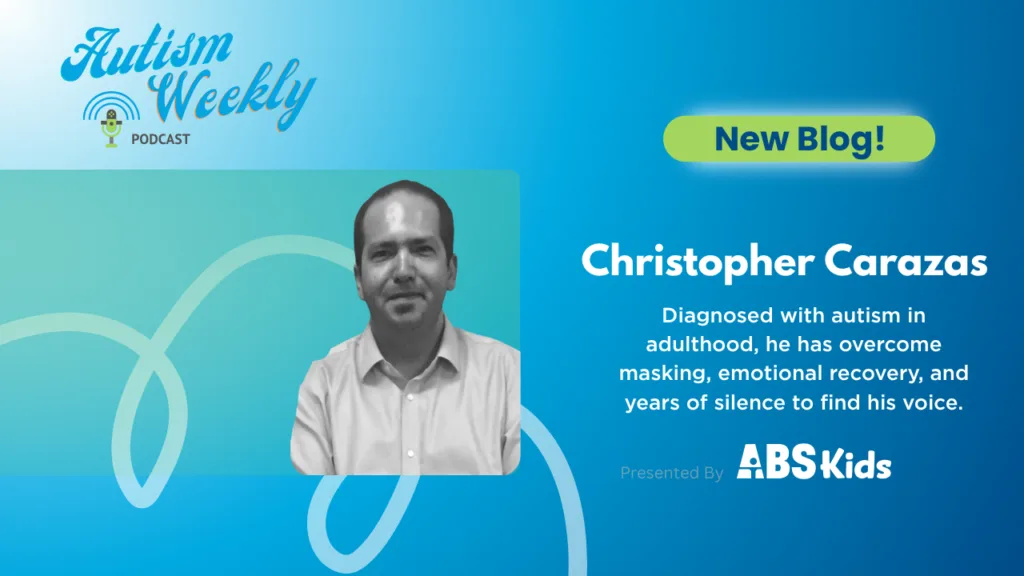
We all have a deep need to be understood. For many neurodivergent individuals, finding the right words to share their experiences can take years. On this week’s episode of the Autism Weekly podcast, host Jeff Skibitsky sits down with Christopher Carazas, a Paraguayan American writer whose life story spans continents, cultures, and a lifetime of resilience.
Diagnosed with autism at age 35, Christopher spent decades navigating a world that often felt overwhelming and unpredictable. Today, he uses his voice to advocate for others. Through his memoir, Now That I’m Still Here, he shares a powerful narrative of survival, emotional recovery, and hope. This episode dives deep into the realities of growing up autistic, the heavy burden of masking, and how we can all work together to foster true inclusion.
Celebrating Autism Acceptance and Awareness Month
Christopher’s story aligns perfectly with the core mission of Autism Acceptance and Awareness Month. This is a time dedicated to celebrating neurodiversity and amplifying autistic voices. It is not just about spreading awareness; it is about taking active steps to foster inclusion in our schools, workplaces, and neighborhoods.
When we listen to firsthand experiences like Christopher’s, we gain a much clearer picture of how to support the autism community. By moving beyond a narrow view of what is considered “normal,” we can build a society that values different perspectives and ways of experiencing the world.
Key Takeaways from Christopher’s Journey
Throughout the conversation, Christopher shares incredibly vulnerable insights into his life. His experiences offer practical lessons and deep encouragement for families navigating an autism diagnosis.
The Heavy Toll of Masking
Growing up overseas as a third culture kid, a child who was raised in a different culture than their parents, Christopher constantly faced changing environments and disrupted routines. To cope with his overwhelming sensory sensitivities and dysregulation, he learned to suppress his natural reactions. He refers to this internal coping mechanism as his “dark passenger.”
While this masking allowed him to blend in and achieve typical life milestones, it came at a massive cost to his emotional and physical health. Masking forces individuals to constantly negotiate with their own nervous systems. Christopher’s story highlights the importance of recognizing these invisible struggles and creating safe spaces where neurodivergent people do not feel forced to hide their true selves.
The Healing Power of Storytelling
Following a period of severe psychological abuse and deep personal trauma, Christopher turned to writing. Initially, he wrote simply to explain his internal world to his late girlfriend, Katie. However, what started as an audience of one soon became a beacon of hope for many.
Writing ‘Now That I’m Still Here’ became a deeply cathartic process. By sharing his darkest moments and his path to recovery, Christopher realized his words could help parents recognize early signs of autism in their children. His story also provides immense comfort to other trauma survivors, proving that healing is possible, even when the path is not a straight line.
The Life-Saving Value of Community
One of the most powerful messages from this episode is the absolute necessity of finding your people. Christopher emphasizes that healing does not happen in isolation.
He shares how small steps helped him rebuild his life. Whether it was connecting with neighbors while walking his loyal German Shepherd, Shadow, or reluctantly joining a local pickleball game at his sister’s urging, these small interactions built a strong support network. He also tapped into local autism support centers and survivor groups. Surrounding yourself with understanding people takes away the loneliness that often accompanies neurodivergence.
Essential Lessons for Families
If you are navigating autism within your own family, Christopher’s experiences offer several practical takeaways:
- Look beyond the behavior: Sensory issues often disguise themselves as behavioral problems. Understand that a child acting out might simply be experiencing severe sensory overload.
- Embrace wide perspectives: Encourage diverse environments where differences are celebrated rather than judged. This helps reduce the pressure to mask.
- Encourage community connections: Help your loved ones find groups that share their interests, whether through sports, hobbies, or dedicated neurodivergent support centers.
- Listen without judgment: Sometimes, the best support you can offer is simply an open ear and a safe shoulder to lean on.
Listen to the Full Episode

